From January 1, “Happy New Year” is あけましておめでとう
- あけましておめでとう
ございます。あけまして おめでとう ございます。 Happy New Year. (polite)
Japanese has two phrases where English has one. あけましておめでとう (akemashite omedetō) celebrates that the new year has safely begun, so it isn't said before January 1. よいお年を (yoi otoshi o) is said before the New Year, when you part from someone you may not see again until it starts.
| Until Dec 31 | よい |
|---|---|
| From Jan 1 | あけましておめでとうakemashite omedetō · “Happy New Year”あけましておめでとう |
Before the year ends
When you part from someone in December.
- よい
お年を。よい おとし を。 Have a happy New Year.
- よい
お年を お迎えください。よい おとし を おむかえ ください。 I hope you have a happy New Year. (the full, polite form)
よいお年を is short for よいお年をお迎えください (yoi otoshi o omukae kudasai), “may you welcome a good year.” The full form is more polite and, Wiktionary notes, rarely used among close friends. It's the usual goodbye the last time you see someone before the New Year.
People also thank each other for the year that's ending:
- 今年も
お世話に なりました。ことし も おせわ に なりました。 Thank you for your support this year.
- 来年も
よろしく お願いします。らいねん も よろしく おねがい します。 I look forward to your continued support next year.
If someone says it to you: a Japanese job site's etiquette guide (Townwork) says to add a word of thanks and say the same back. To a boss or someone above you, use the full よいお年をお迎えください; the short form alone can sound too casual. For example:
- 今年も
お世話に なりました。ことし も おせわ に なりました。 Thank you for your support this year.
- よい
お年を お迎えください。よい おとし を おむかえ ください。 I hope you have a happy New Year, too.
From January 1
The first time you see or message someone in the new year.
- あけましておめでとう。あけまして おめでとう。
Happy New Year.
- あけましておめでとう
ございます。あけまして おめでとう ございます。 Happy New Year. (polite)
- 今年も
よろしく お願いします。ことし も よろしく おねがい します。 I look forward to your continued support this year.
あけまして comes from 明ける (あける, akeru): for night to end, or for a new year to begin. Add ございます (gozaimasu) to say it politely. The greeting is often followed by 今年もよろしくお願いします: “I look forward to your continued support this year.”
Saying it back: a Japanese magazine's workplace etiquette article (Oggi) advises answering in the same words the other person used. At work, it gives あけましておめでとうございます followed by “I look forward to your support this year”:
- あけましておめでとう
ございます。あけまして おめでとう ございます。 Happy New Year.
- 今年も
よろしく お願いいたします。ことし も よろしく おねがい いたします。 I look forward to your continued support this year.
こちらこそ (kochira koso) is a reply meaning “I'm the one who should say that.” When someone says 今年もよろしくお願いします to you, you can answer:
- こちらこそ、
今年も よろしく お願いします。こちらこそ、 ことし も よろしく おねがい します。 Likewise, I look forward to this year with you.
Until when? Opinions differ. Tokyo Weekender writes that it can be used throughout January when you meet a friend or colleague for the first time that year. A Tokyo shrine priest told Weathernews that, in his own view, the New Year greeting is for 松の内 (まつのうち, matsu no uchi), the days when New Year pine decorations are up: until January 7 in the Tokyo area, and until the 15th in some places.
Friends, coworkers and people above you
Short forms for friends, longer ones to be polite.
| Friends | よい |
|---|---|
| Politely | よい |
Between friends, and in messages, people shorten both phrases:
- あけおめ。あけおめ。
Happy New Year! (casual)
- ことよろ。ことよろ。
Here's to this year! (casual)
あけおめ is short for あけましておめでとう, and ことよろ for 今年もよろしくお願いします. Dictionaries mark both as colloquial. Many New Year greetings now go by message: on LINE, Japan's main messaging app, stamp use peaks on January 1 at three times the December average, according to SoraNews24.
To say it more politely, add ございます (gozaimasu) to the greeting and use いたします (itashimasu) instead of します. Dictionaries mark both forms as polite:
- 今年も
よろしく お願いいたします。ことし も よろしく おねがい いたします。 I look forward to your continued support this year. (more polite)
On New Year's cards and notices
Words you'll read rather than hear.
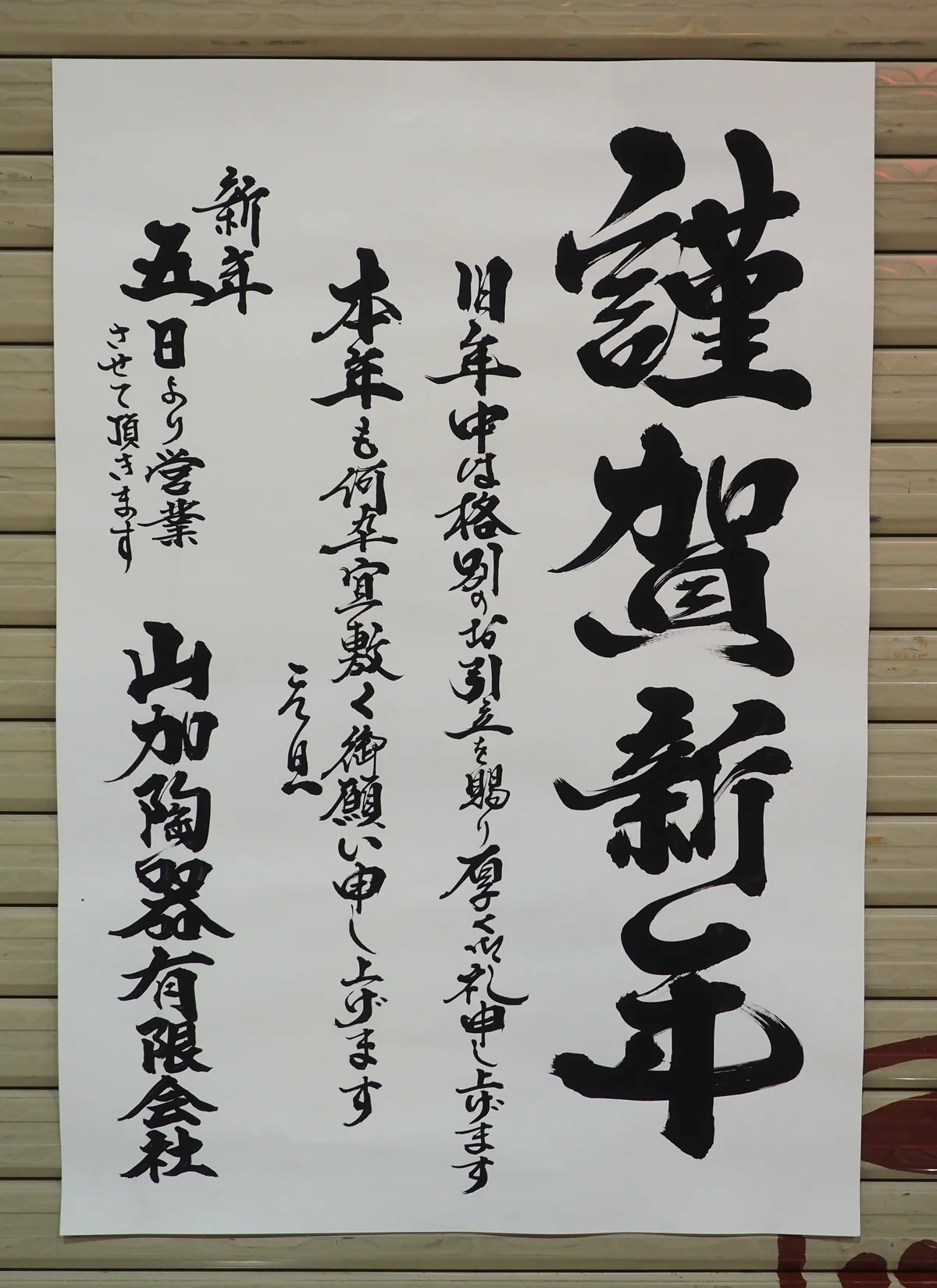
Many people send New Year's cards, 年賀状 (ねんがじょう, nengajō), marked so the post office delivers them on January 1. Cards and shop notices use written words like 謹賀新年:
- 謹賀新年きんが しんねん
Happy New Year (a respectful greeting, written on cards and notices).
The other lines on the shop's notice at the top, in print:
- 旧年中は
格別の お引立を 賜り 厚く 御礼申し上げますきゅうねんちゅう は かくべつ の おひきたて を たまわり あつく おんれい もうしあげます Thank you very much for your kind support last year.
- 本年も
何卒宜敷く 御願い 申し上げますほんねん も なにとぞ よろしく おねがい もうしあげます We ask for your support again this year.
- 元旦がんたん
New Year's Day
- 新年五日より
営業させて 頂きますしんねん いつか より えいぎょう させて いただきます We open again on January 5.
The second line, in today's spelling, is a set phrase for cards and notices:
- 本年も
何卒よろしく お願い 申し上げます。ほんねん も なにとぞ よろしく おねがい もうしあげます。 We humbly ask for your continued support this year. (on cards and notices)
Mourning postcards: a family in mourning doesn't send New Year's cards. Instead, it sends a postcard saying so, usually in early December, before others prepare their cards. A winter greeting card, 寒中見舞い (かんちゅうみまい, kanchū mimai), sent between early January and early February, is also used as a greeting by people who didn't send New Year's cards, for example because they were in mourning.
Which one to use
| Say | When / who |
|---|---|
| よい | Until December 31, the last time you see someone that yearJMdict: “have a happy New Year,” said before the New Year |
| よい | Until December 31, to people above youWiktionary: formal, “rarely used among close friends” |
| あけましておめでとうakemashite omedetō | From January 1 (casual)Daijisen dictionary: the New Year greeting |
| あけましておめでとう | From January 1 (polite)JMdict: “Happy New Year,” polite |
| 今年も | Right after the New Year greetingWiktionary: often follows the greeting |
| 今年も | The same, more politeJMdict: よろしく |
| あけおめakeome | Friends, messagesJMdict: casual (colloquial), short for あけましておめでとう |
| ことよろkotoyoro | Friends, messagesJMdict: casual (colloquial), short for 今年も |
| 謹賀新年kinga shinnen | Written on New Year's cards and noticesDaijisen dictionary: a word written on New Year's cards |
Word by word
お年
おとし · otoshi
the year (polite)
明けまして
あけまして · akemashite
(the year) having begun
明 means bright. 明ける is used both for night ending and for a new year beginning. In the greeting it's usually written in kana.
Stroke order and more words:
Before your trip
Sources: meanings and when to say each phrase from the Daijisen dictionary (Kotobank), Wiktionary and JMdict (via jisho.org); thanking people at year end: The Wa Story; replying to よい